
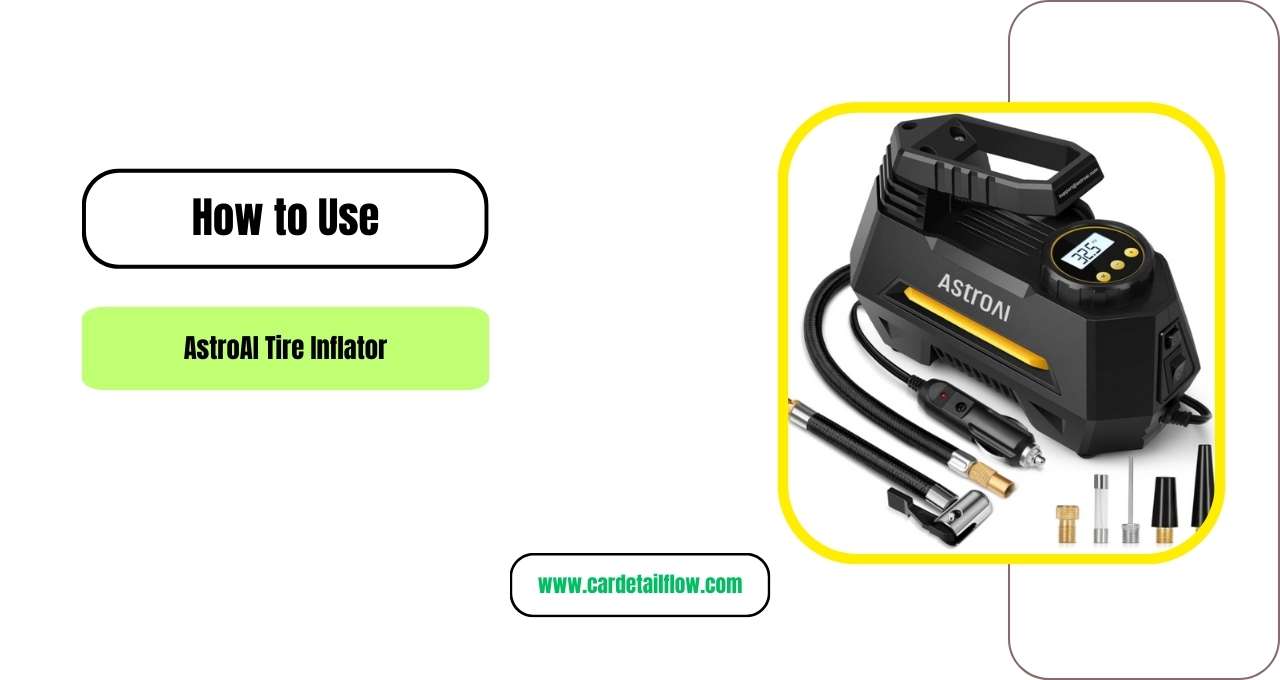
I knew I had a problem the minute I saw my tire. It looked low. My stomach dropped. I was in a rush. I needed air fast. I grabbed my AstroAI tire inflator and hoped it would save me. It did. It felt like a small win on a long day.
This guide will show you how to use the AstroAI tire inflator in a safe and simple way. I will walk you through each step. You will learn what to do, what to avoid, and how to get the best results. My goal is to make this easy, clear, and stress-free for you.
I still think back to the first time I used my AstroAI pump. I was not sure if I was doing it right. My hands shook a bit. The screen felt strange. But I kept going. I tried again and again. With time, I learned the small tricks that make it work well.
I have used many AstroAI pumps over the years. I have used them on cars, bikes, balls, and even pool toys. Some days it felt like the pump was my helper. Other days it felt like it was testing me. But each time taught me something new.
Think of me as a friend who has made the mistakes for you already. I will share what works. I will share what fails. I will share the tips that make the job smooth.
What You Need to Know Before Using the AstroAI Tire Inflator
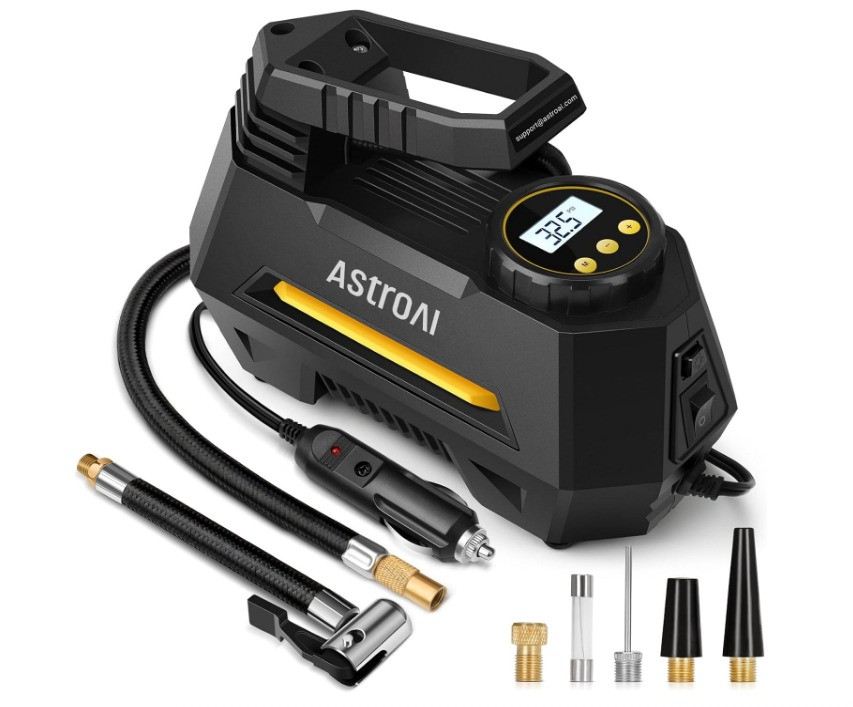
You don’t need to know a lot to get started, but a few things help. AstroAI has many models. Some are digital. Some are analog. Some run on a 12V car plug. Some are small and cordless. Think of them as the same tool in different outfits. They all do one job: push air fast and smooth.
I have tried most of them over the years. I used a 12V model on my car. I used a small cordless one on my bike. I used the needle tip for balls. I even used the wide tip for pool toys. Each job felt a bit different, but the pump never backed down. At times it felt like a tiny helper in my trunk. At other times it felt like a coach yelling “Come on, you got this!”
Before you start, it helps to know where AstroAI sits in the US market. It’s one of the most trusted low-cost brands. Many people buy it because it works well and does not hurt the wallet. I see it as the “everyday hero” of air pumps. It may not be fancy, but it shows up when you need it. It gets the work done without drama.
If you know this much, you are set. Now you can use your AstroAI tire inflator with more ease and more confidence.
How to Use AstroAI Tire Inflator (Step-by-Step Guide)
Here is where things get easy. Think of this as me standing next to you, pointing at each part, and saying, “Do this first, then that.” These steps work for most AstroAI pumps. They are simple, clear, and based on what I learned the hard way.
Step 1 – Locate Your Tire’s Recommended PSI
Start with the PSI. It is like knowing the right “dose” for your tire. You can find it on the driver-side door jamb. It sits on a small sticker. The sticker lists the front and rear PSI. It may look dull, but it is your best friend here.
Set the right PSI because it keeps you safe. Low PSI hurts gas mileage. High PSI makes the ride stiff. One time I guessed the PSI and ended up with a tire that felt like a brick. Trust the sticker. It never lies.
Step 2 – Power the Inflator Correctly
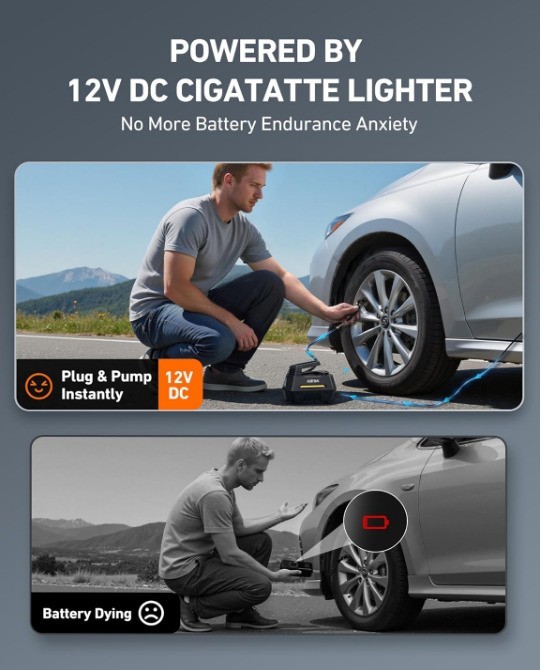
Most AstroAI pumps use a 12V car plug. Push it into the car’s cigarette lighter port. It clicks in place. If you have a cordless model, check the battery first. Make sure it has a good charge. You can plug it in with USB-C if it needs juice.
My tip: keep the engine on. It gives the pump more power. I learned this when my old car gave weak voltage. The pump would sigh, like it was tired. With the engine running, it woke up and worked fast.
Step 3 – Attach the Air Hose Securely
Now screw the hose onto the valve stem. Most AstroAI models use a screw-on nozzle. Turn it clockwise. Make it snug, not tight. Think of it like closing a jar. You want clean contact, not a wrestling match.
Here is my trick to stop leaks: hold the hose straight as you screw it on. If it bends, it leaks. I learned that after hearing a loud hiss one day. It scared me so much I jumped. A straight hose solved it.
Step 4 – Set the Desired PSI on the Display
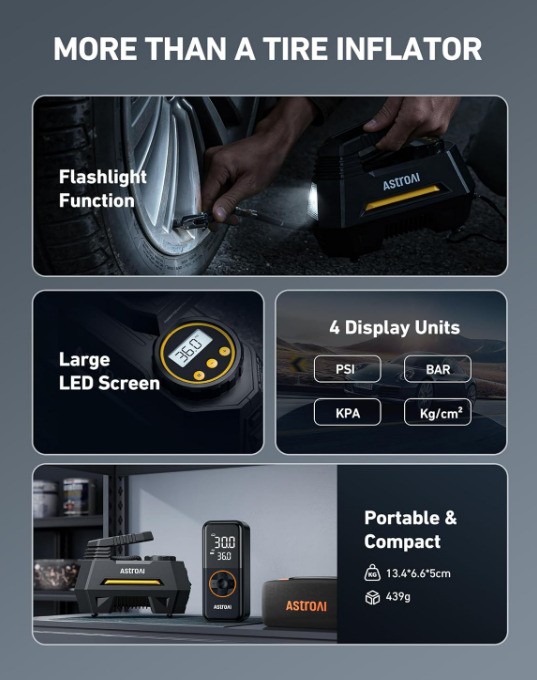
Press the “+” or “–” to set your target PSI. The numbers move fast. Set it to the PSI from your sticker. Digital models show it bright and clear. The preset feature is a blessing. It tells the pump what you want. You don’t have to guess.
AstroAI auto-shutoff is smart. Once it reaches your set PSI, it stops. It feels like the pump saying, “Relax, I got it.” I trust this feature more than I trust my old tire gauge.
Step 5 – Press Start and Begin Inflation
Now hit the power button. The pump wakes up. It makes noise. It may shake a bit. This is normal. Don’t panic. Mine sounds like a tiny lawnmower on a mission.
A tire that is at 28 PSI will reach 35 PSI in about 3 to 5 minutes. I have timed it. I once used a stopwatch out of curiosity. The pump kept going strong. It felt like watching a small hero flex.
Step 6 – Remove Hose & Recheck PSI
Turn off the pump and unscrew the hose. Do it slow. Wait two or three seconds before pulling it off. This gives the pressure time to settle. If you rush, you may lose a bit of air.
I always check the PSI one more time. It gives peace of mind. When the number matches, it feels like a small victory. Like checking off a task on a long list.
How to Use AstroAI Air Pump for Different Tasks
Using the AstroAI pump is not the same for every job. Each task feels a bit different. Some feel calm and slow. Some feel fast and loud. Think of it like using the same spoon for soup, rice, and ice cream. The tool stays the same, but the job changes a bit.
Here is how I use my AstroAI pump for cars, bikes, motorcycles, balls, and more.
How to Work AstroAI Tire Inflator for Car Tires
When I use my AstroAI pump on my car, it feels like a small rescue mission. I still remember a day when my front tire looked soft. It almost looked sad. I pulled out my pump and told myself, “Okay, let’s fix this.”
Here is what I do every time:
- I screw the hose on the valve.
- I set the PSI.
- I hit start.
- I wait for the auto shutoff.
It is simple. It feels like making a cup of instant coffee—quick and sure.
Real example:
One cold morning, my front tire dropped to 26 PSI. I could feel the car drag on the road. I stopped, pulled out the pump, and watched the numbers climb. 26… 28… 31… 35. It was done in minutes. It felt like the tire came back to life.
Common mistakes I see beginners make:
- They do not screw the hose on straight.
- They set the wrong PSI.
- They panic when the pump gets loud.
- They forget to keep the car engine on.
If you slow down, breathe, and follow each step, the job is easy. The pump will do the hard work for you.
My Pro Tips for Getting the Most Out of Your AstroAI Tire Inflator
I have used my AstroAI pump for years, and a few small habits made a big difference. These tips come from real days on the road, real mistakes, and real “thank God this pump is here” moments.
Avoid overheating (5–10 minute duty cycle)
The pump is fast, but it still needs rest. Think of it like a friend who runs hard but needs a short drink break.
Most AstroAI units run safe for 5 to 10 minutes. After that, stop for a few minutes.
I learned this when I tried to fill two tires back-to-back. The pump got warm, like a cup of tea fresh off the stove. Ever since then, I pump one tire, rest a bit, then move on.
Keep the hose straight to prevent backpressure
A bent hose is the root of many small problems. It leaks. It hisses. It throws off the reading.
Keep it straight, like a pencil on a desk. Tight and clean.
I once bent the hose near the valve, and the pump sounded like it was arguing with me. When I straightened it out, the noise stopped. The fix was so simple I laughed.
Best times to check tire pressure (morning, cold tires)
Cold tires tell the truth. Warm tires lie.
That is my simple rule.
Pressure rises when the tire gets hot. So I check my tires early in the morning. The reading is clean. The pump does a better job.
A mechanic once told me, “Cold pressure is real pressure.” He was right.
Why I keep it in my trunk always
My AstroAI pump lives in my trunk like a loyal travel buddy. It stays there next to my jumper cables and my small tool bag.
I keep it there because air problems strike without warning. A cold morning. A small nail. A long drive.
The pump has saved me from calling roadside help more than once. It gives me peace. I like that.
A late-night story where it saved me
One night, I was driving home after a long day. It was close to midnight. The road was dark and quiet. My dash light came on. Low tire.
My heart sank. My mind raced. I pulled over and checked the tire. It was soft but not flat. I grabbed my AstroAI pump.
I stood there under a streetlamp, the pump buzzing like a small hero. In minutes, the tire was firm again. I drove home safe.
That night, I realized how much trust I had in this tiny tool.
Common Issues & How to Fix Them
Even good tools act up sometimes. Here are the most common problems I have seen with AstroAI pumps and how I fix them fast. Think of this as a small “cheat sheet.” Quick answers. Simple fixes.
Pump not turning on
If the pump does not start, I check three things:
• The car socket fuse.
• The plug connection.
• The engine power.
One time my pump stayed silent because the fuse in my car’s power port blew. A cheap fuse from a gas station fixed it in minutes.
Display not reading accurate PSI
If the PSI reading looks odd, I reset the pump and check the valve seal.
Loose connection = wrong reading.
I once saw my tire show 60 PSI on the pump. I knew that was not right. The nozzle was not tight. A quick turn fixed it.
Hose leaking or not threading right
Most leaks come from a crooked hose.
If air hisses, I remove the nozzle and screw it back on with the hose straight.
If the thread feels rough, I wipe the valve stem clean. Dust and sand can mess up the seal.
Auto-shutoff not working
If the pump keeps running past the set PSI, I check two things:
• Is the hose tight?
• Is the preset set right?
Once, mine did not shut off because I bumped the button and changed the target PSI by mistake. It was user error, not pump error.
My general rule for fixing issues
When something feels wrong, I stop, breathe, and check the simple things first. 90% of the time, the fix is small. Dust, loose threads, weak car sockets, or a bent hose.
These pumps are stronger than they look. They just need clean contact and steady power.
FAQs
How does the AstroAI tire inflator work?
It pulls power from your car or its own battery. Then it pushes air into your tire through the hose.
Think of it like a tiny air engine with one job: fill fast and stop clean.
You set the PSI. You press start. It does the rest.
The first time I used it, I was shocked at how smart it felt. It read the tire pressure like it was checking a pulse.
Does AstroAI auto shut off at the set PSI?
Yes, it stops on its own when it hits your target PSI.
It feels like the pump saying, “Okay, we’re done here.”
I trust this more than my old tire gauge. It has never missed the mark for me.
Can I use AstroAI tire inflator while the car is off?
You can, but I don’t recommend it.
The pump may get weak. It may even stop.
I keep my engine on. The power stays steady.
One time I tried it with the car off. The pump sounded tired, like it needed a cup of coffee.
How long does it take to inflate a tire with AstroAI?
About 3 to 5 minutes to go from low (28 PSI) to normal (35 PSI).
Some days it feels even faster.
I once timed it on a cold morning. It hit the number before I even finished checking my phone.
Can AstroAI inflators fill truck or SUV tires?
Yes, most models can.
They may take a bit more time because the tires are big.
My friend has a large SUV, and he jokes that his AstroAI pump is like a tiny cook filling a big pot—slow at first but steady.
It gets there.
Is AstroAI air pump accurate?
Yes, it is very close to pro gauges.
I checked mine against a digital shop gauge. It was off by only 0.5 PSI.
That is good enough for daily use.
I like how the screen gives a clear, clean number. No guessing.
Can I use AstroAI for bikes, balls, and inflatables?
Yes, you can use it for all of them.
It comes with tips for bikes, balls, toys, and more.
I use it for my bike, and I use it for my nephew’s basketball.
It fills fast, so I go slow. A ball can puff up like a drum if you hold the button too long.
Final Thoughts
Using the AstroAI tire inflator is easy. It feels like having a small helper in your trunk that never complains. It shows up when you need it most. Some tools feel like work. This one feels like peace.
I still think back to the night it saved me on a dark road. I was tired. The tire was soft. I felt stuck. But that little pump buzzed to life and gave me hope. It was a tiny thing, but it made the night feel safe again.
If you keep one in your car, you will feel the same peace. It takes the stress out of road trips. It makes early mornings easier. It saves time, money, and worry. You do not need to be a pro. You just follow the steps. The pump does the heavy lifting.
My honest view?
AstroAI is one of the best low-cost tools you can keep in your car.
It works. It lasts. It makes life smooth.
If you use it right, it will help you too.
And when your tire needs air at the worst time, you will be glad you have it with you.

Jake Elston
I am Jake Elston, the founder of CarDetailFlow. I have eight years in car work. I hold a post-grad cert in Automotive Materials and Design Engineering from the University of Michigan–Dearborn. My goal is to share true, simple car help with all drivers.