
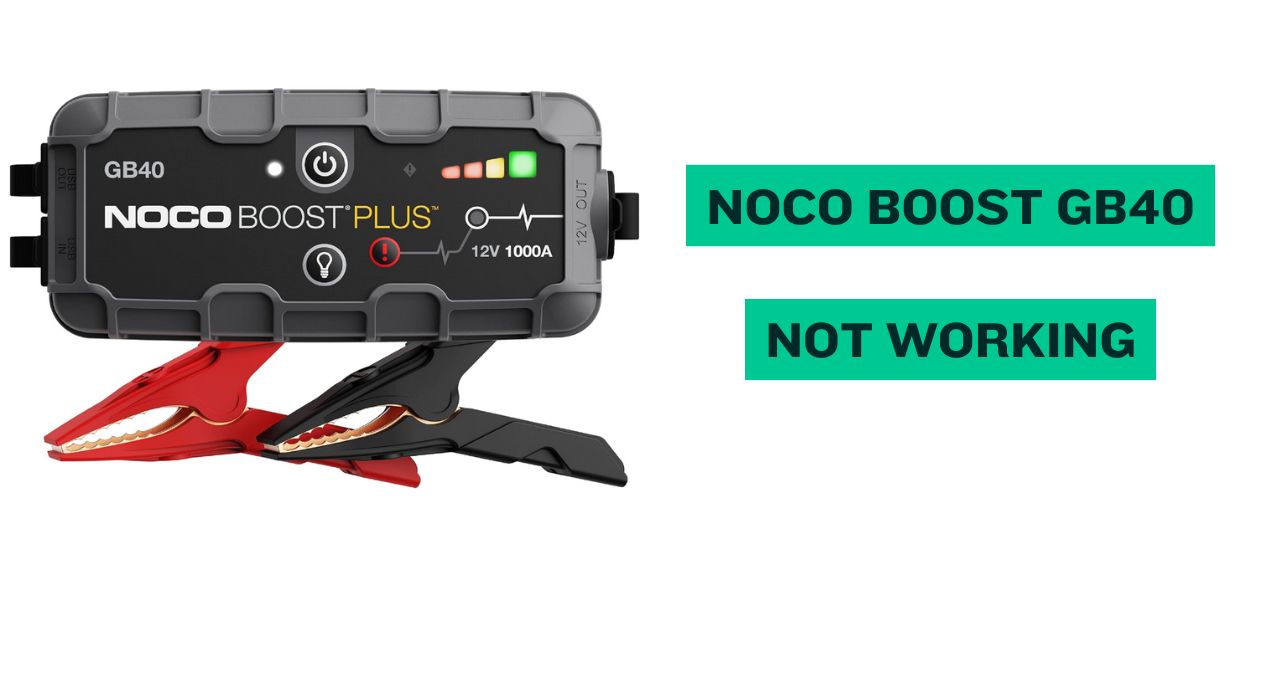
Few things feel worse than when your car will not start and your NOCO Boost GB40 is not working. This happened to me on a cold morning, late for work, with a silent engine and rising stress. I tested my GB40 again and again, read the lights, and even thought it was broken. After real hands-on use, I learned why it failed and how to fix it fast. This guide is for daily drivers, road trips, and emergency kits who want clear answers without stress.
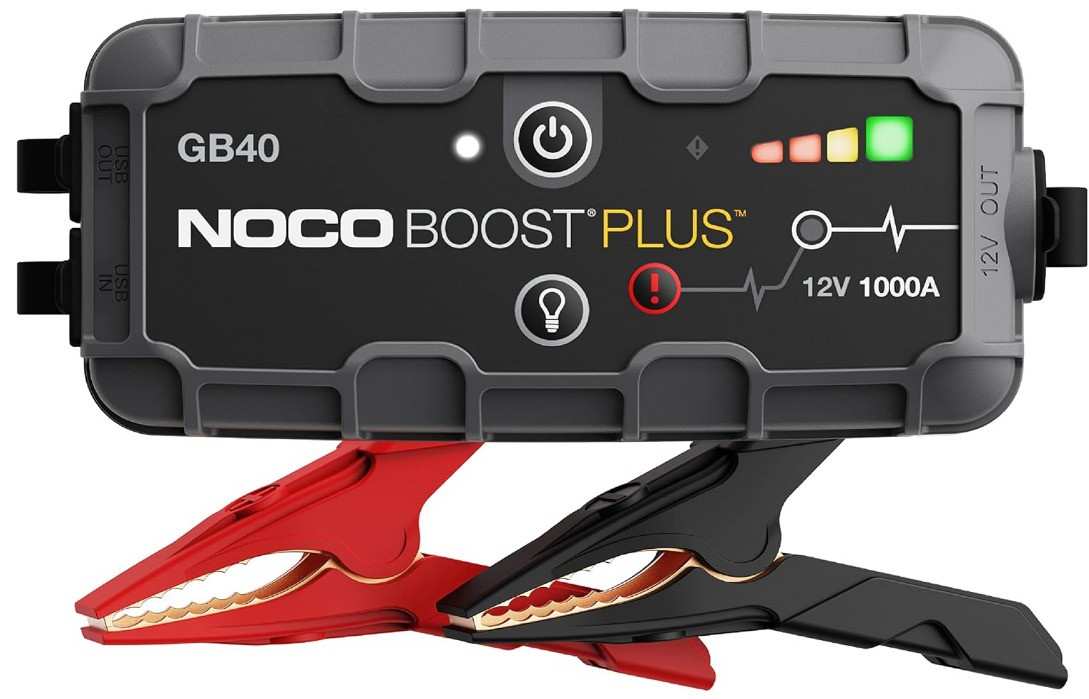
Common Signs Your NOCO Boost GB40 Is Not Working
When my NOCO jump starter failed, the signs were clear—but easy to miss in the moment. It felt like trying to use a flashlight with dead batteries in the dark. If your NOCO Boost GB40 is not working, one of these signs will likely look familiar.
GB40 Won’t Turn On at All
You press the power button, and nothing happens. No lights. No sound. It feels dead.
This happened to me after months of not charging it. A friend later told me the same thing happened before a road trip. Lithium batteries hate being ignored.
GB40 Powers On but Won’t Jump the Car
The lights turn on, but the car stays silent. No click. No crank.
I remember standing there, holding the clamps, thinking, “It says full—why won’t it work?” This usually means the car battery is too weak or the clamps are not making a clean connection.
Flashing LEDs or Error Lights
The GB40 lights blink or flash in a strange pattern. It feels like it is trying to warn you.
The first time I saw this, I panicked. Later, I learned the lights were doing their job. They were telling me the unit was in safety mode to protect my car.
GB40 Shows Full Charge but Does Nothing
All bars are lit, but the jump fails. This one is the most confusing.
It feels like a full gas tank in a car that won’t start. In my case, the GB40 needed override mode because the car battery voltage was too low.
Most Common Reasons the NOCO Boost GB40 Stops Working
When my NOCO Boost GB40 stopped working, I thought it was broken. It was not. Like a phone left in a drawer too long, it just needed the right care. These are the real reasons most GB40 units fail.
Battery Inside the GB40 Is Fully Depleted
Lithium jump starters drain over time, even when not in use. If the GB40 sits for months, the battery can drop too low to wake up.
This happened to me after winter. I had not charged it once. A NOCO user I spoke with said the same thing after a long summer break.
Incorrect Clamp Connection (Very Common)
This is more common than people admit. One loose clamp can stop everything.
I once clipped onto a dirty terminal and got nothing. After a quick wipe, the car started fast. Clean metal matters more than power.
Safety Protection Mode Is Activated
The GB40 has a safety brain. It shuts down when it senses risk.
This protects your car and the unit. It feels annoying in the moment, but it is like a seatbelt. You only miss it when it is gone.
Your Car Battery Is Too Dead
If the car battery voltage is very low, the GB40 will not jump it right away.
Think of it like trying to wake someone in deep sleep. In this case, the GB40 needs override mode to send power without delay.
Extreme Cold or Heat Affected Performance
Cold slows lithium batteries. Heat stresses them.
I learned this during a winter trip when the GB40 worked fine indoors but failed outside. Once warmed up, it came back to life.
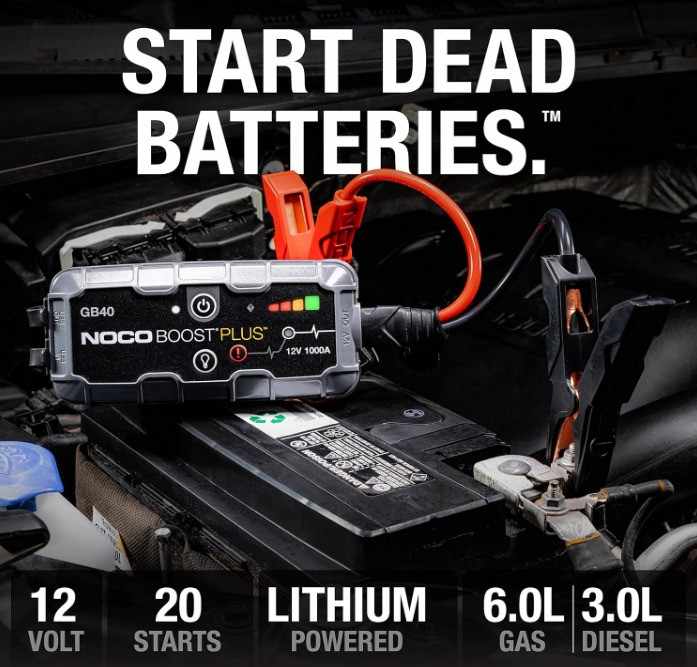
How I Fixed My NOCO Boost GB40 (Step-by-Step)
I fixed my GB40 with calm steps, not panic. Each step felt small, but together they worked. Think of it like restarting a phone that froze.
Step 1 – Fully Recharge the GB40 (Correct Way)
I plugged it into a wall charger and waited. Not a fast USB port.
A full charge took a few hours. After that, the lights stayed solid and strong.
Step 2 – Clean and Reconnect Battery Clamps
I wiped the clamps and car terminals with a dry cloth.
This step felt too simple, but it mattered most. Clean contact means clean power.
Step 3 – Use Manual Override Mode (Safely)
I used override mode only after checking the clamps.
This mode sends power even when the car battery is very low. Use it with care and follow the manual.
Step 4 – Test It on Another Vehicle
I tested the GB40 on a second car. It worked right away.
This told me the unit was fine. The issue was the first battery, not the jump starter.
When the NOCO Boost GB40 Is Actually Defective
Most GB40 issues are fixable. Some are not. I learned this after helping a friend whose unit failed no matter what we tried. When a NOCO Boost GB40 is not working after all steps, it may be defective.
Signs of a Failing Internal Battery
The unit charges, then drops fast. Or it shuts off under load.
This feels like a phone that dies at 50%. When that happens, the battery inside is worn out and cannot hold power.
Charging Port or Cable Issues
You plug it in, but charging cuts in and out.
I once had to hold the cable at an angle to get power. That is a bad sign. A loose port means the unit cannot charge right.
Unit Overheats or Smells Burnt
Heat is a warning. Smell is a stop sign.
If the GB40 gets hot or smells burnt, stop using it. Safety comes first, always.
NOCO jump starters are known for strong build quality. Many come with a limited warranty, often around one year. If yours fails early, support is worth contacting.
Mistakes I Made (So You Don’t Have To)
I learned these lessons the hard way. Each mistake cost me time and stress. Think of this as a shortcut past my errors.
I left the GB40 unused for months. The battery drained slowly, like air from a tire.
I trusted the four bars. They looked full, but they lied under load.
I ignored the LED codes. Those lights are a language, not decoration.
I tried to jump a dead battery without override mode. That was never going to work.
How to Prevent NOCO Boost GB40 Problems in the Future
Prevention is easy once you know the rhythm. Treat the GB40 like a tool, not a trophy. A little care keeps it ready.
Monthly Charging Habit
Charge it once a month. Even if you do not use it.
Lithium batteries stay healthy when they are not forgotten.
Proper Storage Tips
Store it inside. Keep it dry. Avoid heat and deep cold.
Think of it like food. Extreme temps spoil it fast.
Quick Pre-Use Check Routine
Check charge bars. Check clamps. Check cables.
This takes one minute. That minute can save an hour later.
FAQs
These are the questions I hear most. I asked many of them myself when my NOCO Boost GB40 was not working. Here are clear answers without tech stress.
Why is my NOCO Boost GB40 not working even when fully charged?
A full charge does not always mean ready power.
The battery may be weak under load, or the clamps may not be making clean contact. In many cases, the GB40 also needs override mode if the car battery voltage is very low.
Can a NOCO GB40 jump a completely dead battery?
Yes, but not always in normal mode.
If the battery is deeply dead, the GB40 may block power for safety. That is when manual override mode is needed. Think of it like giving a stronger wake-up call.
How long does a NOCO Boost GB40 last before replacement?
With good care, many units last three to five years.
Monthly charging and proper storage matter more than age. I have seen well-kept units outlast newer ones that were ignored.
Does cold weather affect the NOCO Boost GB40?
Yes. Cold slows lithium batteries.
In winter, power drops faster. I keep mine inside the car cabin, not the trunk. Warm batteries work better, every time.
What do the flashing lights on my GB40 mean?
Flashing lights are warnings, not errors.
They can mean bad clamp contact, reversed polarity, or safety mode. Once I learned the light codes, the GB40 made much more sense.
My Final Thoughts – Is the NOCO Boost GB40 Still Worth It?
After real use, my answer is yes—for the right person.
If you are a daily driver, commuter, or road-trip traveler, the GB40 is small, reliable, and easy to carry. It is like a spare tire for your battery.
If you drive larger engines, deal with harsh winters, or jump cars often, you may want more power. In that case, models like the GB70 or GB150 make more sense.
Based on my experience, the GB40 is not perfect—but it is honest. Treat it right, learn its limits, and it will show up when you need it most.

Evan Mitchel
Evan Mitchell has six years of auto shop work. He has a degree in Automotive Technology. He trains with real tools and real cars and knows how to fix many car parts.