

Most issues come from poor connections, wrong mode, or a deeply discharged battery.
If your ctek car battery charger not charging, you’re in the right place. I work with smart chargers and problem batteries every week. This guide explains why a ctek car battery charger not charging happens, what the lights mean, and how to fix it today. We will move fast, keep it simple, and get you back on the road.
What “ctek car battery charger not charging” really means
When people say ctek car battery charger not charging, they see one or more signs. These signs help us find the root cause.
Common symptoms:
- No LEDs at all after power on
- Power light on, but charging bars do not move
- Red error light flashing or solid red
- Mode light stuck and never enters bulk charge
- Charger starts, then stops after a few minutes
- Charger cycles between steps without progress
CTEK models use stages, like desulfation, bulk, absorption, and float. If the charger cannot start bulk, it will stall, blink an error, or stop. That is the core of the ctek car battery charger not charging problem.

Quick checks before you blame the charger
Do these fast checks first. Most fixes are simple.
- Confirm AC power. Test the outlet with a lamp. Avoid long, thin extension cords.
- Inspect the fuse on the charging lead if your model has one.
- Clean the clamps. Oil, paint, or corrosion will block current.
- Clamp to bare metal on the post, not on a painted bracket.
- Check polarity. Red to positive (+). Black to negative (−).
- Select the right mode. Normal, AGM, or snowflake for cold temps. Lithium if supported.
- Feel the battery. If it is ice cold or very hot, wait. Extreme temps pause charging.
- Measure battery voltage with a meter. Below about 2 volts, many chargers will not start.
Personal note: I once chased a ctek car battery charger not charging issue for 20 minutes. The clamp was on a powder-coated bolt. Moving it to bare lead fixed it at once.

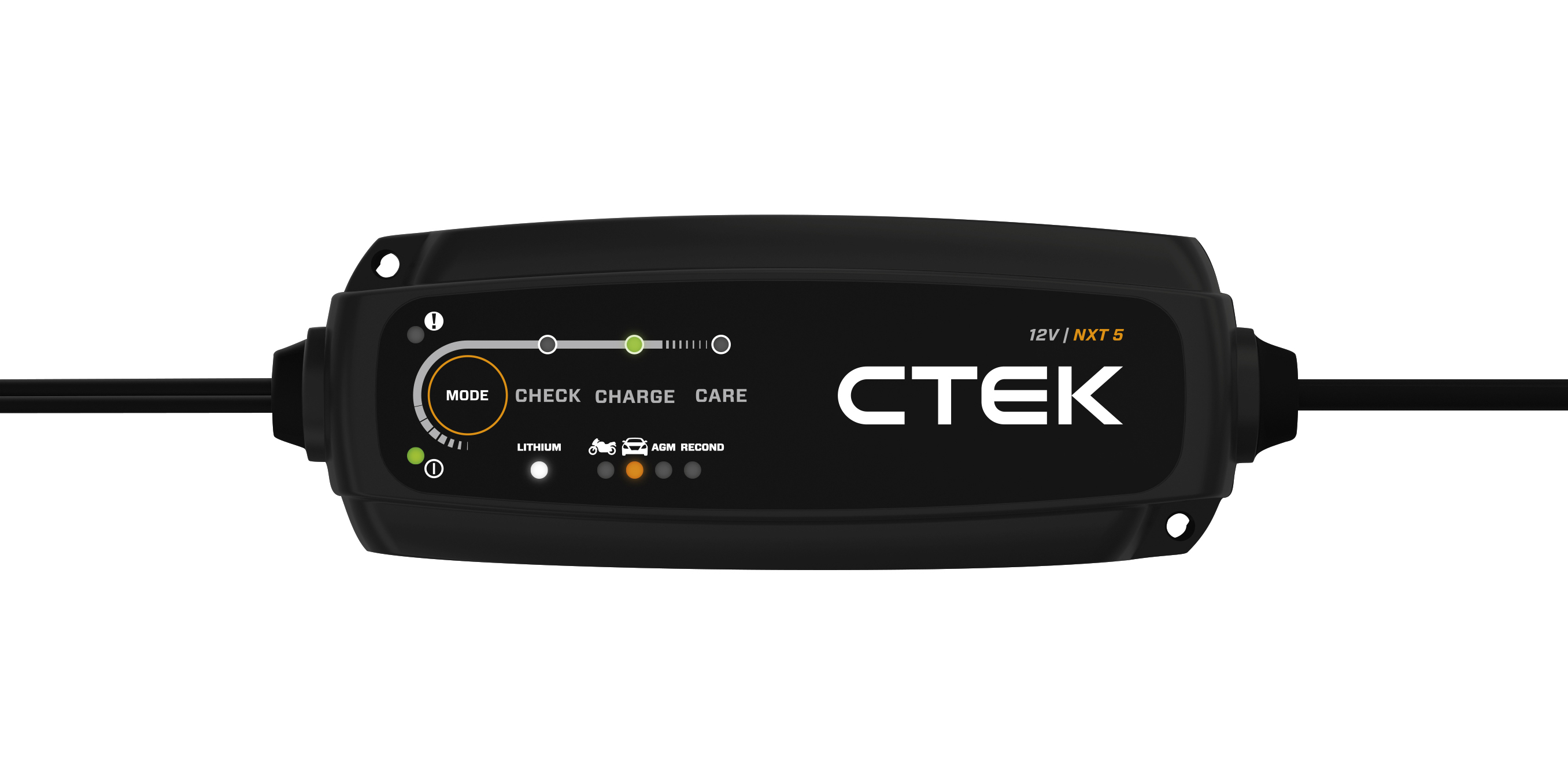
Understanding CTEK light codes and modes
CTEK lights tell a story. Here is the short guide.
- Power light on: AC is present. The unit is alive.
- Step LEDs 1–8: Show each stage from test to float.
- Snowflake: Cold mode. Slower, safer charge in low temps.
- AGM icon: Higher voltage finish for AGM batteries.
- Recond: High-voltage recondition for flat or stratified batteries.
- Supply mode: Constant voltage for memory saving or diagnostics.
- Red error light: Polarity wrong, no battery detected, bad contact, or battery fault.
If you see the red error, do this:
- Remove and reattach clamps on clean, bare metal.
- Make sure mode matches the battery type.
- Measure voltage. If it is near zero, see the deep discharge tips below.
Use these clues to solve the ctek car battery charger not charging case fast.

Common reasons a CTEK won’t start charging
Here are the most common causes I see in the shop.
- Battery below start threshold. Many units will not start if the battery is under about 2 volts.
- Heavily sulfated battery. Internal resistance is high. The charger may try and give up.
- Wrong mode selected. AGM, lithium, or cold mode errors block a good start.
- Bad connection. Painted posts, loose eyelets, or corrosion cause false errors.
- Car not in sleep mode. A strong parasitic draw can fight the charger.
- Temperature limits. Very hot or very cold batteries pause charging.
- Damaged leads or clips. Broken wires or a blown inline fuse stop output.
- Charger in Supply mode. It holds voltage and may not enter charge stages.
- Lithium battery on a lead-acid charger. The logic will not detect it right.
- Internal charger protection. Overheat or short-circuit protection can latch until reset.
Any one of these can trigger the ctek car battery charger not charging problem. Often, two or three stack up.
Step-by-step troubleshooting guide
Work through these steps. Keep notes. Go from easy to advanced.
- Verify the outlet and cord
- Plug in a lamp. If it flickers, pick another outlet.
- Avoid long, thin cords. Use a short, heavy one.
- Inspect the leads
- Check the fuse on the charging lead, if fitted.
- Flex the cable near the clamp. If the light cuts out, the wire may be broken.
- Clean and clamp right
- Brush the posts. Remove paint, oil, and crust.
- Clamp to battery posts or solid engine ground.
- Select the correct mode
- Lead-acid flooded or EFB: Normal mode.
- AGM: AGM or snowflake if cold.
- Lithium: Only use a CTEK lithium model.
- Check battery voltage
- Use a meter. Above 12.4V is good. Under 12.0V is low. Near 0–2V is very flat.
- If under about 2V, the charger may not start.
- Wake up a deeply discharged battery
- If safe, parallel a healthy 12V battery with jump leads for 2–5 minutes.
- Start the CTEK on Normal mode. Once it begins bulk, remove the helper battery.
- Note: Do not do this on damaged or frozen batteries.
- Reduce parasitic draw
- Lock the car. Wait 10–20 minutes for modules to sleep.
- Pull the interior light fuse if it stays on during charge.
- Try Recond or a long absorption
- Use Recond mode on a tired lead-acid battery. Run it once.
- Let the charger stay in absorption until it moves to float on its own.
- Test on a known-good battery
- If the charger fails on a healthy battery, the unit may be faulty.
- If it works, the issue is with the car battery or the connections.
- Reset the charger
- Unplug AC. Disconnect clips. Wait one minute.
- Reconnect and try again.
If you still face ctek car battery charger not charging after step 10, note the light pattern and model number. You can now decide on repair, warranty, or battery service.
Special cases: AGM, EFB, lithium, and start-stop systems
Battery type matters. So does the car system.
- AGM batteries
- Use AGM mode or snowflake in cold climates.
- Expect a slightly higher finish voltage. This is normal.
- EFB start-stop batteries
- Normal mode is fine. Keep sessions longer to top off.
- Lithium (LiFePO4)
- Use only a CTEK lithium model. Lead-acid modes will not work.
- Many lithium BMS units block charge below freezing.
- Cars with smart alternators
- A low resting voltage can be normal. The charger must finish the cycle.
- Lock the car and let modules sleep to reduce load.
- 24V trucks or boats
- Use a 24V CTEK model. A 12V charger will not start.
If you mismatch battery type and mode, you may see ctek car battery charger not charging signs right away.

When to repair, replace, or upgrade your charger
A few checks will guide your choice.
- The charger fails on a known-good battery
- Likely charger fault. Contact support for tests or service.
- Cable or clamp damage
- Replace the lead set if removable. Do not tape and hope.
- Under warranty
- Many CTEK units include a multi-year warranty. Check your label and receipt.
- Out of warranty
- Compare repair cost with a new model. Newer units add better diagnostics.
- Considering an upgrade
- Pick higher amperage for larger batteries or faster charge.
- Pick a lithium-capable model if you may switch chemistries.
If you keep seeing ctek car battery charger not charging, even after fixes, an upgrade can save time and stress.
Prevention: charging habits that work
Good habits prevent the next ctek car battery charger not charging scare.
- Connect clean
- Keep posts bright and tight. Use dielectric grease on clamps.
- Charge on a schedule
- For short-trip cars, connect overnight each week.
- Store it smart
- Float a parked car every 3–4 weeks. Avoid deep discharge.
- Use eyelet leads
- Install comfort eyelets on hard-to-reach batteries.
- Mind the temperature
- Do not charge frozen or overheated batteries. Let them rest first.
- Watch resting voltage
- 12.6–12.8V is full for most lead-acid. Under 12.2V needs time on the charger.
These steps keep the battery strong and help avoid ctek car battery charger not charging in the future.
Real-world examples and lessons learned
From my bench and driveway, here are quick wins.
- The “dead” AGM at 1.4V
- The charger would not start. I paralleled a good battery for three minutes. The CTEK woke up and finished a full cycle. That battery stayed in service six more months.
- The stubborn SUV with a trunk battery
- The clamp was on a painted bracket. Moving to the battery post fixed the ctek car battery charger not charging issue at once.
- The weekend-only sports car
- A 3.8A charger struggled due to alarm draw. Moving to a 7–10A unit solved it and cut charge time in half.
Small details matter. Clean metal, right mode, and a little patience go a long way.
Frequently Asked Questions of ctek car battery charger not charging
Why is my CTEK car battery charger not charging at all?
Check the outlet, fuse, and clamps first. If lights are dead on a known-good outlet, the charger may be faulty.
What does the red error light mean on CTEK?
It flags bad contact, wrong polarity, no battery, or a battery fault. Clean and reclamp, then recheck mode and voltage.
Can a CTEK charge a totally dead battery?
If it is near zero volts, many models will not start. Use a helper battery to “wake” it, or try Recond if the battery is not damaged.
Which mode should I use for AGM batteries?
Use AGM mode, or snowflake in cold weather. This allows the right finish voltage and safer charging.
How long should a CTEK take to charge?
Small batteries can reach float in a few hours. Large or very flat batteries may need overnight or longer.
Will a parasitic drain stop charging?
A heavy draw can slow or block charging. Let the car sleep or pull the fuse for the device while you charge.
Is it safe to leave a CTEK connected?
Yes, CTEK float and pulse maintenance is designed for long-term use. Ensure good ventilation and secure leads.
Conclusion
A smart charger is only as good as its setup. Clean contact, the right mode, and a healthy battery solve most issues fast. If your ctek car battery charger not charging, follow the steps here, take a meter reading, and let the lights guide you. With a few simple checks, you can recover a flat battery, protect your charger, and avoid repeat headaches.
Ready to fix it now? Grab a meter, pick your mode, and start the checklist. If you found this helpful, share it with a friend, subscribe for more hands-on guides, or drop your question in the comments.

Evan Mitchel
Evan Mitchell has six years of auto shop work. He has a degree in Automotive Technology. He trains with real tools and real cars and knows how to fix many car parts.