

Attach clamps, select mode, and let CTEK auto-charge until green.
If you want a safe, smart way to revive and maintain a 12V battery, you’re in the right place. I’ve used CTEK units for years on cars, bikes, and boats. In this guide, I’ll show you how to use CTEK car battery charger the right way, with clear steps, pro tips, and real results you can trust.
Why CTEK chargers stand out
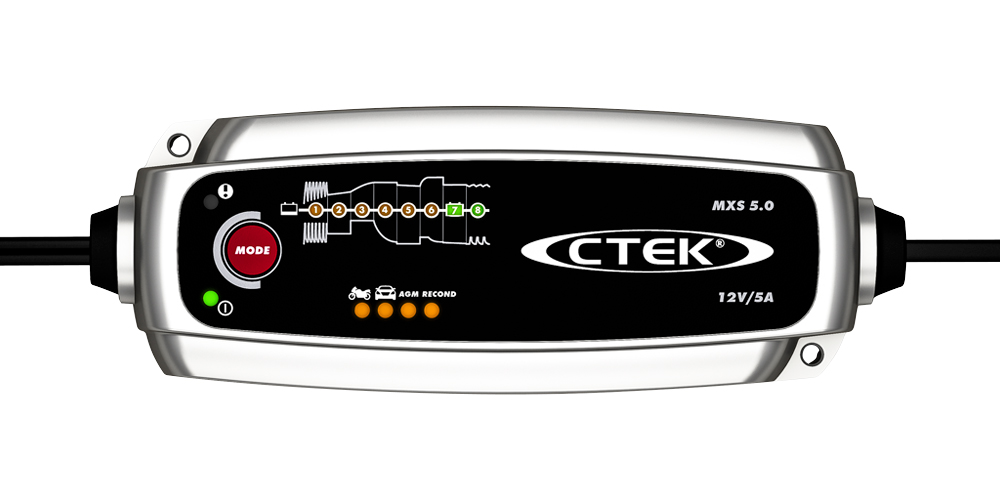
CTEK chargers are smart, safe, and simple. They use an 8-step program to test, charge, and maintain your battery. The charger is spark-proof, reverse-polarity protected, and temperature-aware. That means less stress and better battery health.
Most models work with standard lead-acid, AGM, EFB, and GEL batteries. They are perfect for daily cars, classics, and start-stop systems. A CTEK unit can restore weak batteries and then hold them at a safe level for storage.
If you want to know how to use CTEK car battery charger with confidence, start by learning what your battery needs. Then let the charger do the heavy lifting.
Safety and prep checklist
Before you connect, take a minute to prepare. It keeps you safe and protects your car’s electronics.
- Park in a dry, well-ventilated spot. Keep away from heat and flames.
- Turn off ignition and all accessories. Remove the key.
- Check the battery label. Confirm type: Flooded, AGM, EFB, or GEL.
- If the battery is in the car, find safe connection points. Use the remote positive post if your car has one.
- Inspect clamps and cables. Clean any corrosion on the terminals.
- If the battery is frozen, do not charge it. Let it warm first.
These quick checks make how to use CTEK car battery charger simple and safe.
Step-by-step: how to use CTEK car battery charger
Follow these steps. They work for common models like MXS 5.0, MUS 4.3, and similar units.
- Identify battery type
- Check the label. Flooded, AGM, EFB, or GEL. Lithium requires a CTEK Lithium model.
- Connect the clamps with power off
- Red to positive (+). Black to negative (−) or a chassis ground point.
- Plug the charger into AC power
- The charger powers up and runs a quick self-check.
- Select the correct mode
- Normal for standard lead-acid.
- AGM/Snowflake for AGM or cold weather use.
- Recond only for deep recovery on a very flat, older lead-acid battery.
- Supply mode keeps a steady voltage for memory saves or diagnostics (if available).
- Let the charger run through its stages
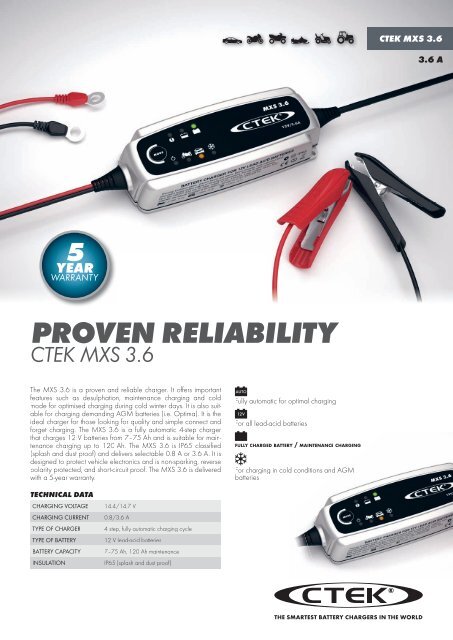
- It will analyze, charge, and then maintain the battery. Lights show the stage.
- Watch the LEDs
- A full green light means the battery is charged and maintained.
- Leave it connected for maintenance
- CTEK can stay on for weeks. It will float and pulse to keep the battery healthy.
- Unplug and disconnect in reverse order
- Unplug AC first. Then remove black clamp, then red clamp.
- Test the car
- Start the engine. If it cranks fast, the battery is happy.
- Store the charger
- Coil the cable loosely. Keep it dry and dust-free.
Here is a simple truth about how to use CTEK car battery charger: choose the right mode, connect it right, and then be patient. Let the charger finish the job.
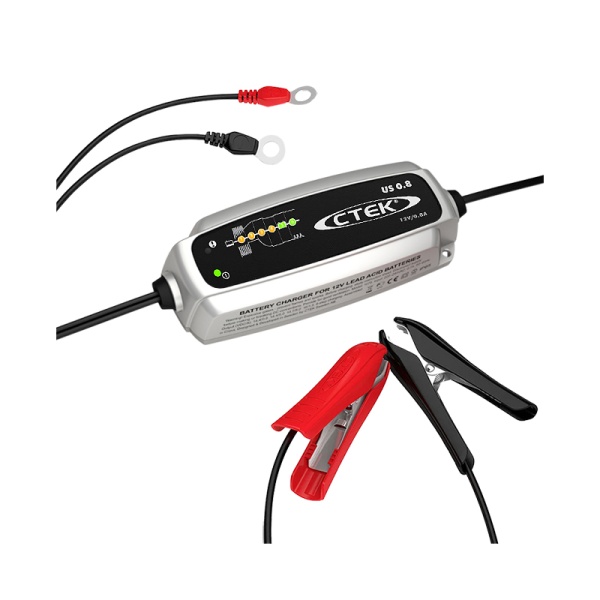
Pro tip: Use the CTEK Comfort Connect eyelet cable on cars you charge often. It makes future hookups easy and fast.

Picking the right mode and battery chemistry
Not all batteries need the same settings. Use the correct mode to protect your battery and get the best charge.
- Normal mode
- Use for most flooded lead-acid and EFB batteries. Great for daily drivers.
- AGM/Snowflake mode
- Use for AGM batteries. Also use in cold weather. It raises voltage for a full top-off.
- Recond mode
- Use on neglected, deeply discharged lead-acid batteries. It tries to recover sulfation. Do not use often. Do not use on AGM or GEL unless the manual allows it.
- Supply mode (if present)
- Keeps a steady 13.6–13.8V to power the car during diagnostics or memory saves. Do not leave in Supply for long periods.
- Lithium mode
- Only for the CTEK Lithium charger. Use it for LiFePO4 batteries. Never use lead-acid modes on lithium.
If you’re unsure, check the manual for your model. This choice is the most important part of how to use CTEK car battery charger without risk.

Understanding the 8 charging stages and LEDs
The LED lights show where you are in the process. Each stage helps your battery in a safe way.
- Desulfation
- Pulses try to break up lead sulfate on plates. Helps old batteries.
- Soft start
- Gently raises current to test if the battery can accept charge.
- Bulk charge
- Most energy goes in here. Voltage rises. This is the fastest step.
- Absorption
- Slows the charge to safely reach 100% without heat or gassing.
- Analyze
- The charger checks if the battery holds charge. Weak batteries may fail here.
- Recondition (if selected)
- A controlled higher voltage can revive a tired battery.
- Float
- Maintains 100% at a safe low voltage.
- Pulse/maintenance
- Short top-ups keep the battery ready for weeks or months.
Once you know these stages, how to use CTEK car battery charger feels easy. You can read the LEDs like a fuel gauge for your battery.

Troubleshooting and common mistakes to avoid
I’ve made a few of these mistakes so you do not have to. Here are quick fixes.
- Wrong mode selected
- Symptom: Slow charge or poor results. Fix: Use AGM mode for AGM; avoid Recond unless needed.
- Bad connection
- Symptom: No progress or error light. Fix: Clean terminals. Clamp to bare metal or the correct chassis ground.
- Deeply dead battery
- Symptom: Charger will not start. Fix: Pre-charge with another battery in parallel for a few minutes. Then try again. Or use Supply mode if your model allows a recovery start.
- Using lead-acid charger on lithium
- Symptom: Risk of damage or failure to charge. Fix: Only use CTEK Lithium for LiFePO4.
- Charging in freezing conditions
- Symptom: Ice can crack plates. Fix: Warm the battery first. Then charge in AGM/Snowflake if AGM.
- Supply mode left on
- Symptom: Battery may overheat over long periods. Fix: Use normal charge, then float, not Supply, for storage.
When you learn how to use CTEK car battery charger with the right checks, most issues go away.
Real-world setups and pro tips
From my garage to winter cabins and marinas, here is what works well.
- Weekend sports car
- Install Comfort Connect eyelets. Route the plug to the grille area. Clip in after each drive. The car starts strong every time.
- Motorcycle
- Use the bike adapter. AGMs love regular maintenance. Keep it on float during the off-season.
- Family SUV with start-stop (EFB or AGM)
- Use AGM mode when the label says AGM. You will see better idle-stop behavior and longer battery life.
- Boat or RV
- Charge each house battery bank one at a time. Label cables to avoid a mix-up. Vent the area well.
- Winter storage
- Clean the terminals. Top off charge. Leave the charger connected for maintenance. Check monthly.
These steps make how to use CTEK car battery charger part of your routine, like setting a thermostat. Set it once, then relax.

Care for your charger and long-term battery health
A few small habits keep your charger and battery in top shape.
- Coil and store cables gently
- Avoid tight bends. Keep the unit dry and clean.
- Use a good extension cord
- If needed, use a heavy-duty outdoor cord. Keep connections off wet floors.
- Keep terminals clean
- A quick brush and a light coat of dielectric grease prevent corrosion.
- Know your numbers
- Resting voltage near 12.6–12.8V means a healthy, full battery. Under 12.0V is low. Recharge soon.
- Replace when needed
- If the battery fails the Analyze stage often, or drops fast after a full charge, it may be time for a new one.
Build these habits into how to use CTEK car battery charger and you will save money and avoid no-start mornings.
Frequently Asked Questions of how to use ctek car battery charger
Can I leave my CTEK connected all the time?
Yes. CTEK chargers switch to safe float and pulse modes. They can maintain a battery for weeks or months.
Which mode should I use for an AGM battery?
Use the AGM or Snowflake mode. It raises voltage to give AGM cells a full, safe charge.
How long does a full charge take?
It depends on charger size and battery capacity. Many car batteries need 4–12 hours; very low ones can take longer.
Can I charge the battery while it’s still in the car?
Yes, in most cases. Use the car’s approved positive post and a clean chassis ground if the negative terminal is hard to reach.
What if the charger shows an error light?
Check connections, mode selection, and battery condition. Clean terminals and try again; if it persists, the battery may be faulty.
Do I need a special charger for lithium car batteries?
Yes. Use the CTEK Lithium model for LiFePO4 batteries. Do not use lead-acid modes on lithium.
How do I know when to use Recond?
Use Recond on older, deeply discharged flooded batteries only. Avoid frequent use and check your manual for AGM or GEL guidance.
Conclusion
Using a CTEK is simple: connect it right, pick the right mode, and let it finish. Your battery charges fast, stays healthy, and your car is ready to go. Make how to use CTEK car battery charger part of your maintenance routine, and stop worrying about surprise no-starts.
Try the steps today and note how your engine cranks. If you found this helpful, share it, subscribe for more DIY guides, or drop a question in the comments.

Evan Mitchel
Evan Mitchell has six years of auto shop work. He has a degree in Automotive Technology. He trains with real tools and real cars and knows how to fix many car parts.